


Microsoft 365 Subscription vs One-Time Office License: Cost Breakdown

Introduction
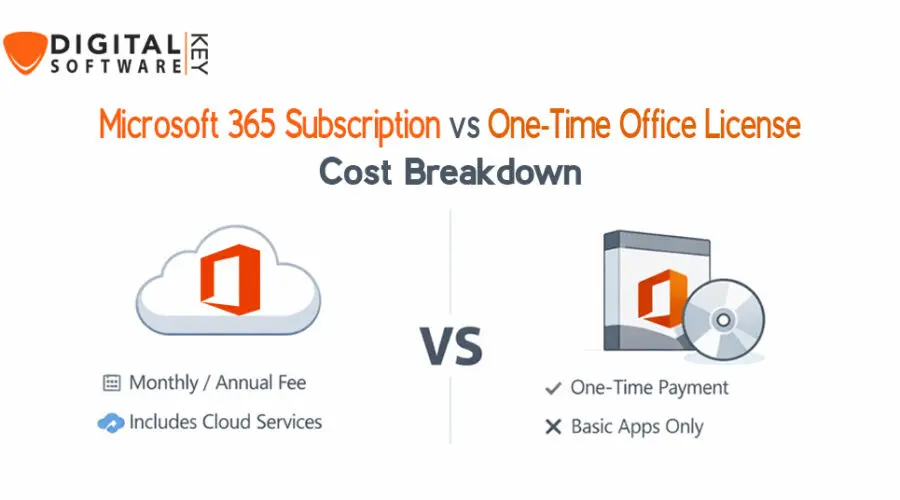
Microsoft Office tools remain essential for work and study today. However, buyers often face confusion. They must choose between Microsoft 365 Subscription and a one-time Office license. Therefore, cost comparison matters greatly. This article explains the real cost breakdown. It also explains long-term value. Moreover, it clears common myths. uses a recurring payment model. Meanwhile, a one-time Office license requires one upfront payment.
At first glance, the license seems cheaper. However, deeper costs change that view. Updates, cloud storage, and security matter. Therefore, this comparison helps smart buyers. Microsoft 365 Subscription offers constant updates. It also offers cloud access. On the other hand, Office 2021 stays fixed. This article explains both clearly. Additionally, it helps home users.
It also helps businesses. Cost matters every year. Therefore, choosing wisely saves money. Microsoft 365 Subscription continues to grow in popularity. Users enjoy flexibility. They also enjoy access anywhere. Meanwhile, one-time licenses feel limited. This article explains everything in simple terms. It uses real examples. It avoids confusion. Let us now explore the real cost story behind and one-time Office licenses.
What Is Microsoft 365 Subscription
Microsoft 365 Subscription is a cloud-based service. It uses monthly or yearly payments. Therefore, users spread costs over time. It includes Word, Excel, PowerPoint, and Outlook. It also includes OneDrive storage. Users get one terabyte of cloud space. Additionally, supports multiple devices. Users install apps on PC, Mac, tablets, and phones. This flexibility adds value. Updates arrive automatically. Therefore, users always get new features. Security updates also arrive instantly.
This keeps data safe. Microsoft 365 Subscription suits modern work styles. Remote work grows every year. Cloud access supports this trend. Moreover, Microsoft Teams comes included. This helps collaboration. Businesses benefit greatly. Home users also enjoy convenience. Microsoft 365 also offers family plans. These plans cover multiple users. Therefore, costs divide easily. Overall, Microsoft 365 offers ongoing value. It focuses on access, updates, and security. Cost grows slowly. However, benefits grow steadily. This model fits modern digital needs.
What Is a One-Time Office License
A one-time Office license requires one payment. Users buy Office 2021 or similar versions. They install it once. Then they use it forever. However, updates remain limited. Feature updates do not arrive. Only security updates appear. Therefore, apps remain unchanged. Users miss new tools. One-time Office licenses work on one device. This limits flexibility. Users cannot install on many devices. Cloud features also remain minimal. OneDrive storage stays small.
Collaboration tools remain basic. Businesses often feel restricted. Home users may feel fine initially. However, needs grow over time. One-time Office licenses also age quickly. New file formats may appear. Compatibility issues may follow. Therefore, hidden costs appear later. Users may need upgrades sooner than expected. This adds future expenses. The one-time model looks simple. However, it lacks long-term adaptability.
Initial Cost Comparison
Initial pricing attracts many buyers. One-time Office licenses cost more upfront. Microsoft 365 Subscription costs less at first. Therefore, buyers notice the difference quickly. Office 2021 Home costs a single payment. Microsoft 365 spreads costs yearly. This helps budgeting. Students and freelancers prefer this. Small businesses also like predictable expenses. However, after three years, costs shift. Microsoft 365 continues payments. Office license remains paid off. Still, value matters beyond price. Microsoft 365 includes extras. Cloud storage alone adds value. Buying OneDrive separately costs more. Therefore, the initial comparison needs deeper review. Cost without features tells only half the story.
Long-Term Cost Breakdown
Long-term costs reveal real value. Microsoft 365 Subscription costs accumulate yearly. However, features also grow. Office license costs remain fixed. However, features stay frozen. Over five years, Microsoft 365 Subscription may cost more. Yet, users gain updates and security. Data breaches cost money. Downtime costs money. Microsoft 365 reduces these risks. Therefore, indirect savings matter. Businesses value reliability. Home users value convenience. Long-term cost includes time savings. Microsoft 365 Subscription saves time. Automatic updates reduce effort. Cloud access reduces hardware dependence. Therefore, long-term value often favors .
Update and Feature Value
Updates matter in modern software. Microsoft 365 Subscription delivers constant updates. New features arrive regularly. AI tools also appear. Microsoft Copilot now supports productivity. One-time Office licenses never receive these tools. Therefore, users miss innovation. Feature stagnation affects efficiency. Microsoft 365 evolves with work trends. This keeps users competitive. Businesses need modern tools. Students also benefit. Feature value increases every year. Therefore, Microsoft 365 Subscription offers future readiness.
Cloud Storage Cost Comparison
Cloud storage costs money. Microsoft 365 includes one terabyte. Buying this separately costs more yearly. One-time Office licenses include minimal storage. Users must buy extra storage. Therefore, hidden costs appear. Cloud storage supports backups. It also supports sharing. Microsoft 365 Subscription includes this by default. This adds strong value. Users avoid third-party services. Therefore, Microsoft 365 Subscription reduces total spending.
Multi-Device Usage Cost
Modern users own many devices. supports this. Users install apps everywhere. One-time Office licenses restrict usage. Buying multiple licenses increases cost. Therefore, Microsoft 365 Subscription becomes cheaper. Families benefit greatly. Businesses also save money. Device flexibility adds hidden savings. This favors Microsoft 365 Subscription strongly.
Business Cost Efficiency
Businesses analyze cost deeply. Microsoft 365 Subscription offers scalable plans. Businesses add or remove users easily. One-time Office licenses lack flexibility. Scaling costs more. IT management also becomes harder. Microsoft 365 Subscription simplifies management. Central dashboards save time. Time equals money. Therefore, businesses prefer subscriptions. Security compliance also improves. This reduces legal risk. Microsoft 365 fits business growth.
Security and Compliance Costs
Security breaches cost heavily. Microsoft 365 Subscription includes advanced security. Threat detection runs continuously. One-time Office licenses rely on outdated protection. Therefore, risk increases. Recovering from breaches costs money. Microsoft 365 reduces this risk. This adds unseen savings. Security should never be ignored. Therefore, subscription value grows.
Education and Student Cost Value
Students need affordability. Microsoft 365 offers discounts. Some institutions offer free access. One-time Office licenses rarely offer this. Students also need cloud storage. Group projects require collaboration. Microsoft 365 Subscription supports this. Therefore, education favors subscriptions. Cost value improves greatly.
Advertising DigitalSoftwareKey
Buying genuine software matters. DigitalSoftwareKey offers trusted Microsoft products. Users save money safely. You can buy Microsoft 365 Subscription keys easily. Prices remain competitive. Delivery stays fast. Support remains reliable. Visit Digitalsoftwarekey for authentic licenses. This ensures peace of mind. Avoid risky sources. Choose verified sellers. DigitalSoftwareKey supports smart buyers.
One-Time License Hidden Costs
Hidden costs hurt budgets. One-time Office licenses lack upgrades. Users eventually repurchase newer versions. This increases total spending. Compatibility issues also appear. Support ends eventually. Therefore, long-term costs rise silently. Microsoft 365 avoids this trap. Continuous updates remove upgrade costs.
Microsoft Official Cost Perspective
Microsoft promotes subscriptions strongly. This reflects market trends. You can review official pricing on
Microsoft’s official Microsoft 365 page.
This helps comparison. Transparency builds trust. Microsoft 365 Subscription aligns with future software models.
Conclusion
Microsoft 365 Subscription offers strong long-term value. One-time Office licenses feel simple initially. However, hidden costs grow. Updates, security, cloud storage, and flexibility matter. Microsoft 365 Subscription supports modern needs. It saves time. It improves security. It grows with users. Therefore, cost breakdown favors subscriptions for most users. Home users gain convenience. Businesses gain efficiency. Students gain collaboration. Microsoft 365 Subscription proves smarter over time. Choose wisely. Think long-term. Invest in productivity.
FAQ’s
What is Microsoft 365 Subscription?
Microsoft 365 Subscription is a cloud-based Office service. It uses monthly or yearly payments.
Is Microsoft 365 cheaper long-term?
Yes, for most users. It includes updates, cloud storage, and security.
Can I use Microsoft 365 Subscription on many devices?
Yes. You can install it on multiple devices easily.
Does a one-time Office license get updates?
No. It only gets security updates. Features remain fixed.
Is Microsoft 365 Subscription good for businesses?
Yes. It offers scalability, security, and collaboration tools.
25 thoughts on “Microsoft 365 Subscription vs One-Time Office License: Cost Breakdown”
Comments are closed.